
Real Estate Calculators
Seller Financing Calculator
Calculate the monthly payment and — critically — the balloon balance due, for an owner-financed property sale.

Calculate the seller-financed loan
Set the balloon term equal to the amortization term for a fully amortizing loan with no balloon.
Principal & interest only — property tax, insurance, and any HOA dues are typically paid separately in seller financing, not bundled into this payment.
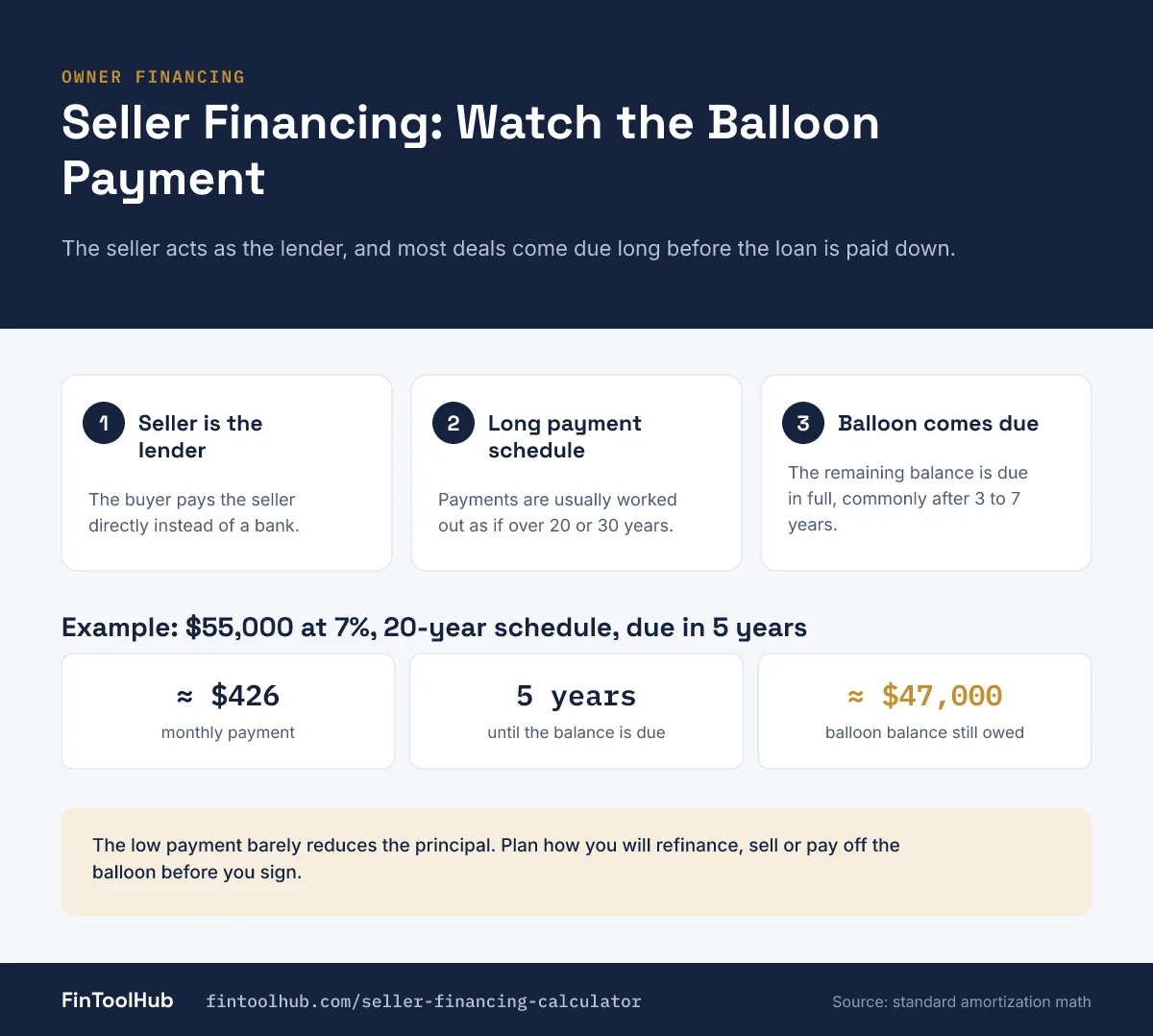
How a seller financing calculator works
Seller financing (also called owner financing) uses the same monthly payment math as a bank mortgage, but the seller is the lender — the buyer's down payment plus monthly principal-and-interest payments go directly to the seller instead of a bank, with the property serving as collateral through a promissory note and security instrument. The formula for the payment itself is standard mortgage amortization: loan amount, rate, and term produce a fixed monthly payment, same as any seller financing calculator would compute for a bank loan.
What makes seller financing different — and what a generic mortgage calculator won't show you — is the balloon structure most of these deals actually use.
Why the balloon payment matters more than the monthly payment
A common structure: the payment is calculated as if the loan amortizes over 30 years (or 20), keeping the monthly payment manageable, but the entire remaining balance becomes due in full much sooner — commonly 3 to 7 years, with 5 years cited most often. The buyer is expected to refinance with a conventional lender, sell the property, or otherwise pay off that balance when it comes due.
This is the single most important number in a seller-financed deal, and it's exactly what the calculator above is built to surface — not just the payment, but what's actually still owed when the clock runs out.
Federal rules limit balloon payments for frequent sellers
Under Regulation Z (12 CFR § 1026.36), a seller who finances more than three properties in a 12-month period is generally treated as a mortgage originator and must offer a fully amortizing loan — no balloon payment is permitted — unless a licensed mortgage loan originator is involved in structuring the deal. A seller financing one property occasionally typically qualifies for a narrower exemption. This is a genuine federal compliance issue, not just deal structuring — sellers who finance multiple properties regularly should get legal guidance before including a balloon.
The due-on-sale risk sellers often miss
Tax treatment for the seller
Seller-financed sales are typically treated as installment sales under IRC §453 — rather than recognizing the full capital gain in the year of sale, the seller generally reports gain proportionally as principal payments are received over the life of the loan, while the interest portion of each payment is taxed as ordinary income in the year received. Our Capital Gains Tax Calculator can help estimate the underlying gain before it's spread across the installment period.
Typical terms
| Term | Typical range |
|---|---|
| Down payment | 10–20% of purchase price |
| Interest rate | Above prevailing conventional mortgage rates, to compensate the seller for added risk |
| Balloon due date | 3–7 years, commonly 5 |
Balloon payment structure and worked example referenced against Forbes Advisor's owner financing guide. Federal balloon payment rules referenced against Regulation Z, 12 CFR § 1026.36. This is a planning estimate, not legal or tax advice — both buyer and seller should involve an attorney to draft the promissory note and security instrument.
Frequently asked questions
Before you sign a promissory note.
How is a seller-financed payment calculated?
The same way as a bank mortgage payment: loan amount, interest rate, and amortization term produce a fixed monthly principal-and-interest payment. What's different is that many seller-financed loans use a short balloon term, so the full remaining balance comes due well before the amortization schedule would otherwise pay it off.
What is a balloon payment in seller financing?
A large lump-sum payment of the entire remaining loan balance, due at a set date (commonly 3-7 years) that's much shorter than the amortization term used to calculate the monthly payment. The buyer typically needs to refinance, sell, or otherwise come up with that balance when it's due.
Can a seller include a balloon payment if they finance several properties?
Federal rules under Regulation Z generally require sellers who finance more than three properties in a 12-month period to offer fully amortizing loans with no balloon, unless a licensed mortgage loan originator is involved. Occasional sellers financing a single property typically qualify for a narrower exemption.
What happens if the seller still has a mortgage on the property?
Their existing lender's due-on-sale clause could be triggered once the property transfers, allowing that lender to demand immediate full repayment — a real risk if the seller can't cover it. This doesn't apply if the seller owns the property free and clear or has the existing lender's consent.
How is the seller taxed on the payments they receive?
Generally as an installment sale under IRC Section 453 — capital gain is recognized proportionally as principal payments come in over the life of the loan, while the interest portion of each payment is ordinary taxable income in the year received.